

Do home RO water purifiers remove asbestos?
Jan 22, 2026
Leave a message
As a supplier of Home RO Water Purifiers, I frequently encounter a wide array of questions from customers about the capabilities and limitations of our products. One question that has emerged quite often is: "Do home RO water purifiers remove asbestos?" This is a critical inquiry, considering the health risks associated with asbestos exposure through water consumption. In this blog post, I will delve into the scientific aspects of asbestos, how RO water purifiers work, and whether they can effectively remove asbestos from water.
Understanding Asbestos
Asbestos is a group of six naturally occurring fibrous silicate minerals that have been widely used in various industries due to their heat resistance, strength, and insulating properties. However, it is now well - established that asbestos can pose significant health risks when its fibers are inhaled or ingested. When asbestos - containing materials deteriorate, the tiny fibers can be released into the air or water. In water, asbestos fibers can come from natural deposits in the ground or from the corrosion of asbestos - cement pipes used in water distribution systems.
Exposure to asbestos has been linked to serious health problems, including asbestosis, lung cancer, and mesothelioma. While the primary concern is usually inhalation, ingestion of asbestos - contaminated water can also have adverse health effects, although the risk is generally considered lower compared to inhalation.
How RO Water Purifiers Work
Reverse Osmosis (RO) is a water purification process that uses a semi - permeable membrane to remove ions, molecules, and larger particles from drinking water. The process works by applying pressure to the water on one side of the membrane, forcing it through the small pores of the membrane while leaving behind contaminants.
An RO water purifier typically consists of multiple stages of filtration. The initial pre - filtration stages remove larger particles such as sediment, sand, and rust. Then, the water passes through the RO membrane, which is designed to block contaminants based on their size, charge, and solubility. After the RO membrane, post - filtration stages are used to improve the taste and quality of the water by removing any remaining odors or residual contaminants.

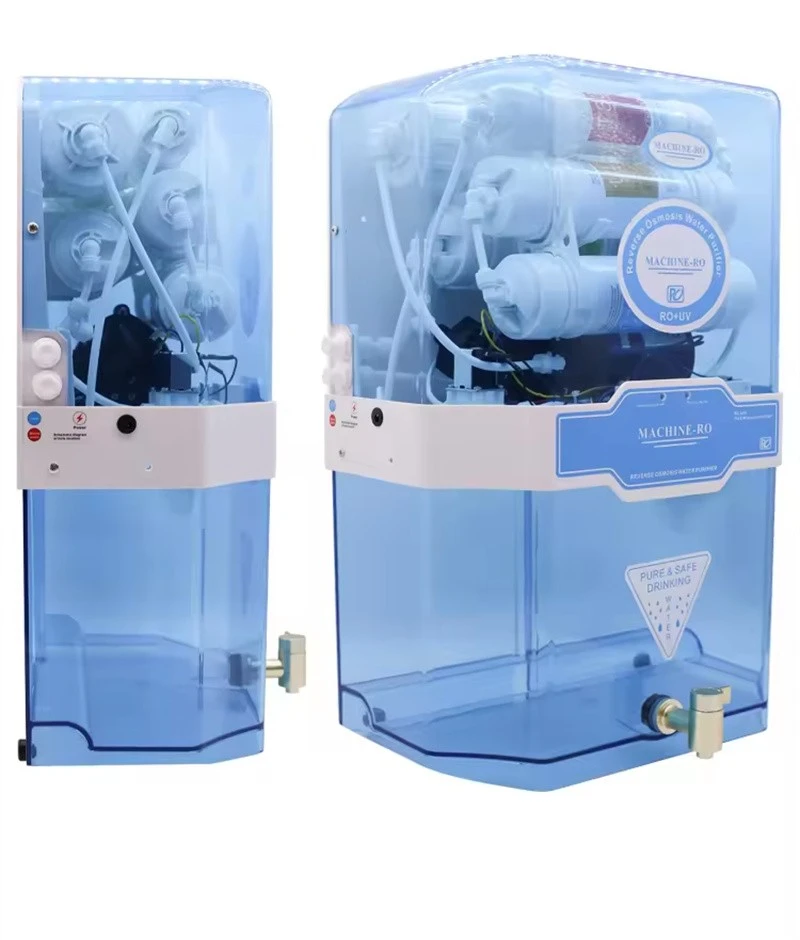
Can RO Water Purifiers Remove Asbestos?
The effectiveness of an RO water purifier in removing asbestos depends on the size of the asbestos fibers. Asbestos fibers can vary in size, but they generally range from about 0.01 to 100 micrometers in length and 0.01 to 1 micrometer in diameter.
The pores in an RO membrane are extremely small, typically around 0.0001 micrometers in size. This means that most contaminants, including asbestos fibers, are too large to pass through the membrane. In theory, an RO water purifier should be able to effectively remove asbestos from water because the asbestos fibers are much larger than the pores of the RO membrane.
However, it's important to note that the efficiency of asbestos removal can also be affected by other factors. For example, if the RO membrane is damaged or if the water pressure is not properly maintained, the performance of the purifier may be compromised. Additionally, if the water contains a high concentration of other contaminants, they may foul the membrane and reduce its ability to remove asbestos effectively.
Our RO Water Purifiers and Asbestos Removal
At our company, we take pride in offering high - quality home RO water purifiers designed to provide safe and clean drinking water. Our 75gpd 6 Stage RO Water Purifier and 75gpd 100gpd 6 Stage RO Water Purifier are equipped with advanced RO membranes and multi - stage filtration systems.
The pre - filtration stages in our purifiers are designed to remove larger particles that could potentially damage the RO membrane. This ensures that the RO membrane can work at its optimal level to remove contaminants, including asbestos. The post - filtration stages further enhance the water quality by removing any remaining impurities and improving the taste.
Our Household Frame Water Purifier is another reliable option for families concerned about asbestos and other contaminants in their water. It provides a comprehensive purification solution that can effectively reduce the presence of asbestos and other harmful substances in the water.
Ensuring Optimal Performance
To ensure that our RO water purifiers continue to remove asbestos and other contaminants effectively, it is crucial to follow proper maintenance procedures. This includes regularly replacing the filters as recommended by the manufacturer. Over time, the filters can become clogged with contaminants, which can reduce the efficiency of the purifier.
It is also important to have the water quality tested periodically, especially if you suspect that your water source may be contaminated with asbestos. This can help you determine if the purifier is working effectively and if any adjustments need to be made.
Conclusion
In conclusion, home RO water purifiers have the potential to effectively remove asbestos from water. The small pore size of the RO membrane is designed to block asbestos fibers, along with other contaminants. However, proper maintenance and installation are essential to ensure optimal performance.
If you are concerned about asbestos in your water or any other contaminants, our range of home RO water purifiers can provide you with a reliable solution. We are dedicated to providing high - quality products that meet the highest standards of water purification.
If you are interested in purchasing our home RO water purifiers or have any questions about our products, please feel free to contact us for a detailed consultation. We look forward to working with you to ensure that you and your family have access to safe and clean drinking water.
References
- Environmental Protection Agency (EPA). Asbestos. [Insert publication year].
- World Health Organization (WHO). Asbestos: Public health statement. [Insert publication year].
- American Water Works Association (AWWA). Water quality and treatment: A handbook of community water supplies. [Insert publication year].