

Are 100G RO membranes more prone to clogging?
Dec 19, 2025
Leave a message
Hey there! As a supplier of 100G and 400G RO membranes, I often get asked if 100G RO membranes are more prone to clogging. Well, let's dive right into this topic and break it down.
First off, let's understand what RO membranes are. Reverse Osmosis (RO) membranes are a key component in water purification systems. They work by allowing water molecules to pass through while blocking contaminants like salts, heavy metals, and other impurities. The “G” in 100G and 400G stands for gallons, which indicates the daily water production capacity of the membrane. A 100G RO membrane can produce about 100 gallons of purified water per day, while a 400G membrane can churn out around 400 gallons.
Now, the question of clogging. There are a few factors that can contribute to an RO membrane clogging, and it's not always about the membrane's capacity.
One of the main culprits is the quality of the incoming water. If the water has a high concentration of suspended solids, colloids, or organic matter, it can build up on the surface of the membrane over time. Think of it like a filter getting dirty. The more junk there is in the water, the faster the membrane will get clogged. This is true for both 100G and 400G membranes. For example, if you're using water from a well that has a lot of sediment, you're going to have a higher risk of clogging regardless of the membrane size.
Another factor is the pre - filtration system. A good pre - filtration setup can significantly reduce the amount of debris that reaches the RO membrane. This usually includes sediment filters and activated carbon filters. If these pre - filters aren't doing their job or aren't replaced regularly, the RO membrane will have to deal with more contaminants, increasing the likelihood of clogging.
Now, back to the question of whether 100G RO membranes are more prone to clogging. In some cases, they might seem to be. Since a 100G membrane has a lower water production capacity, it might take longer for the water to pass through. This means that contaminants have more time to accumulate on the membrane surface. However, it's not a hard and fast rule.
If the water quality is good and the pre - filtration is adequate, a 100G membrane can last a long time without clogging. On the other hand, a 400G membrane might clog faster if it's subjected to extremely dirty water or if the pre - filtration is poor.
Let's talk about some real - world scenarios. In a small household where the water usage is relatively low, a 100G membrane might be a great choice. The water demand is not high, and with proper pre - filtration, it can provide clean water for a long time. But in an industrial setting where large volumes of water are needed, a 400G membrane is usually preferred. However, industrial water sources can be dirtier, so proper pre - treatment is crucial.

When it comes to preventing clogging, regular maintenance is key. This includes replacing pre - filters on schedule, monitoring the water pressure, and cleaning the RO system periodically. Some RO systems come with self - cleaning mechanisms, which can help extend the life of the membrane.
Now, let's touch on some related products. If you're looking for a water ultrafiltration system for industrial use, you can check out Water Ultrafiltration System Industrial. This system can help remove larger particles and impurities before the water reaches the RO membrane, reducing the risk of clogging.
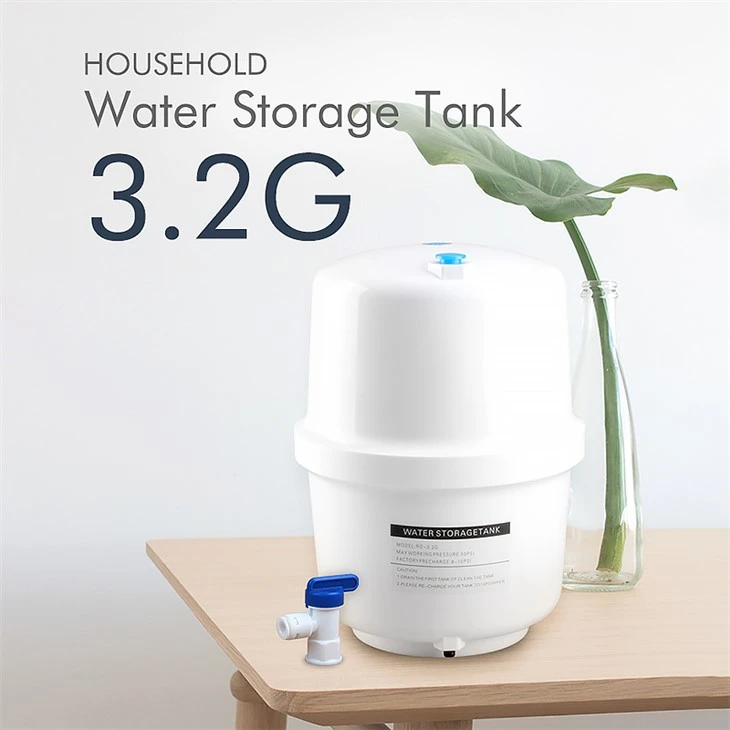
A Water Pressure Tank is also an important component in a water purification system. It helps maintain a steady water pressure, which is essential for the proper functioning of the RO membrane. Without a stable pressure, the membrane might not work efficiently, and it could even lead to premature clogging.
And if you're in need of a high - capacity RO membrane, the 8040 Reverse Osmosis RO Membrane is a great option. It's designed to handle large volumes of water and can be a good choice for industrial applications.
In conclusion, whether a 100G RO membrane is more prone to clogging depends on a variety of factors. It's not just about the membrane's capacity but also the water quality, pre - filtration, and maintenance. As a supplier of 100G and 400G RO membranes, I can provide you with the best products and advice on how to keep them in top condition.
If you're interested in purchasing RO membranes or any of the related products, feel free to reach out for a procurement discussion. We can talk about your specific needs and find the best solutions for your water purification requirements.
References
- “Reverse Osmosis Membrane Technology: Principles and Applications” by S. Sourirajan
- “Water Treatment Handbook” by Veolia Water Technologies