

How does an 800G RO water filter work?
Dec 19, 2025
Leave a message
Hey there! As a supplier of 800G RO water filters, I'm super excited to take you through how these amazing devices work. Whether you're a homeowner looking to upgrade your water filtration system or a business owner seeking a reliable water purification solution, understanding the ins and outs of an 800G RO water filter is crucial. Let's dive in!
What Exactly is an 800G RO Water Filter?
Before we get into the nitty - gritty of how it works, let's clarify what we're talking about. The “800G” in the name stands for 800 gallons per day. This means that the RO water filter is capable of producing up to 800 gallons of purified water within a 24 - hour period. It's a high - capacity system, perfect for large households or commercial settings where there's a significant demand for clean, fresh water.
The Basics of Reverse Osmosis
Reverse osmosis (RO) is the key technology behind these water filters. In nature, osmosis is a process where water moves through a semi - permeable membrane from an area of low solute concentration to an area of high solute concentration. But in reverse osmosis, we do the opposite. We apply pressure to the water on the side with a high solute concentration, forcing it through the semi - permeable membrane to the side with a lower solute concentration.
The semi - permeable membrane in an 800G RO water filter is designed with tiny pores. These pores are so small that they can block most impurities, such as dissolved salts, heavy metals, bacteria, and viruses. Only water molecules and a few very small particles can pass through.
The Filtration Stages
Most 800G RO water filters come with a multi - stage filtration process. A common setup is a 5 - stage filtration system, like the 5 - stage Filtration Home Water Filter. Here's what happens at each stage:
Stage 1: Pre - filtration
The first stage is usually a sediment filter. Its job is to remove large particles like sand, dirt, rust, and silt from the water. If these large particles weren't removed, they could damage the more delicate components further down the line, like the RO membrane.
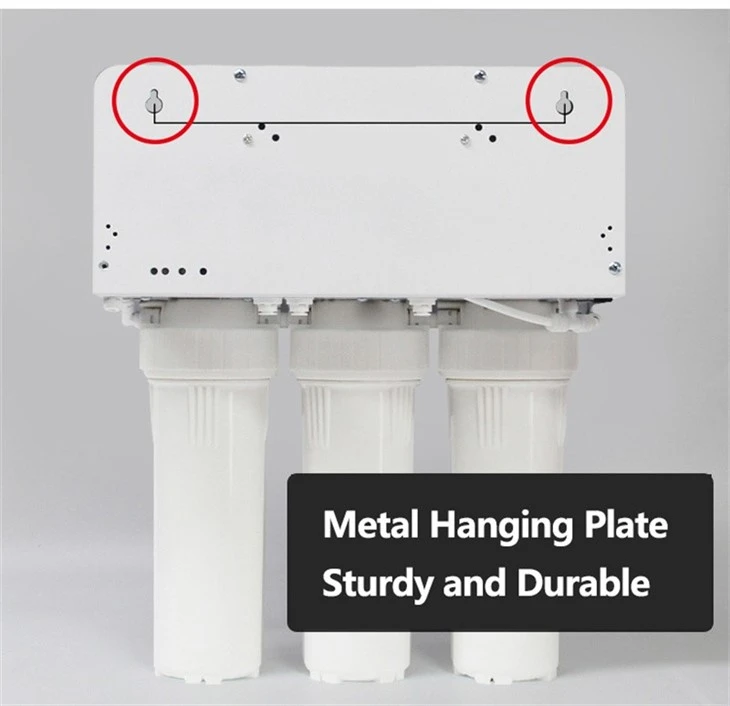

Stage 2: Carbon Filtration
Next up is the carbon filter. This filter targets chlorine, volatile organic compounds (VOCs), and bad tastes and odors in the water. Chlorine is often added to municipal water supplies for disinfection, but it can have an unpleasant taste and odor. Carbon is great at adsorbing (not absorbing) these substances, leaving the water tasting and smelling better.
Stage 3: RO Membrane Filtration
This is the heart of the system. The RO membrane is responsible for removing up to 99% of dissolved solids, heavy metals (such as lead, mercury, and arsenic), fluoride, and many other contaminants. As I mentioned earlier, the water is forced through this membrane under pressure, and only the purest water molecules make it through.
Stage 4: Post - carbon Filtration
After the water has passed through the RO membrane, it goes through another carbon filter. This post - carbon filter further enhances the taste and quality of the water by removing any remaining traces of contaminants that might have slipped through the RO membrane.
Stage 5: Optional UV Sterilization
Some 800G RO water filters, like the Home Water Purifier With UV, include an additional UV sterilization stage. UV light is used to kill any remaining bacteria, viruses, and other microorganisms that might be present in the water. This provides an extra layer of protection, especially if you're concerned about microbiological contamination.
The Pressure and Flow
For the RO process to work effectively, there needs to be enough pressure. Most 800G RO water filters require a certain amount of water pressure to force the water through the membrane. If the incoming water pressure is too low, the system may not work efficiently, and the water production rate will decrease.
In addition to pressure, the flow rate of the water is also important. The 800G rating indicates the maximum amount of water the system can produce in a day. However, the actual flow rate can be affected by factors such as the water temperature, the level of contaminants in the water, and the condition of the filters.
The Wastewater Issue
One of the things you might be concerned about when using an RO water filter is the amount of wastewater it produces. During the reverse osmosis process, not all of the water that enters the system becomes purified water. Some of it is used to flush away the contaminants that are trapped by the RO membrane. This is known as wastewater.
The ratio of purified water to wastewater can vary depending on the system. Modern 800G RO water filters are designed to be more efficient, with better wastewater ratios. However, it's still important to be aware of this aspect and consider ways to reuse the wastewater, such as for watering plants or cleaning.
Why Choose an 800G RO Water Filter?
If you're in the market for a water filtration system, an 800G RO water filter has a lot to offer. For large households, it can easily meet the daily water needs without you having to worry about running out of purified water. In commercial settings, like restaurants, hotels, or offices, the high capacity ensures that there's always enough clean water for cooking, drinking, and other uses.
Moreover, the advanced multi - stage filtration process provides a high level of purification. You can be confident that the water you're getting is free from a wide range of contaminants. And if you choose a system with UV sterilization, you have an extra safeguard against harmful microorganisms.
If you're interested in our 800g Water Purifier Household, or if you have any questions about our 800G RO water filters, don't hesitate to reach out. We're here to answer all your queries and help you find the best water filtration solution for your needs. Whether you're a first - time buyer or looking to upgrade your existing system, we can guide you through the process. Contact us today to start the conversation about purchasing and let's work together to ensure you have access to the cleanest, purest water possible.
References
- "The Principles of Reverse Osmosis", Water Technology Journal
- "Advanced Filtration Systems for Home and Commercial Use", Plumbing and Water Supply Magazine
- "Maximizing Efficiency in RO Water Filters", Filtration Industry Report